Traction on Lawrence Ave: How Mazda's i-ACTIV AWD Handles Ontario's Urban Winter Streets
November 28 2025,
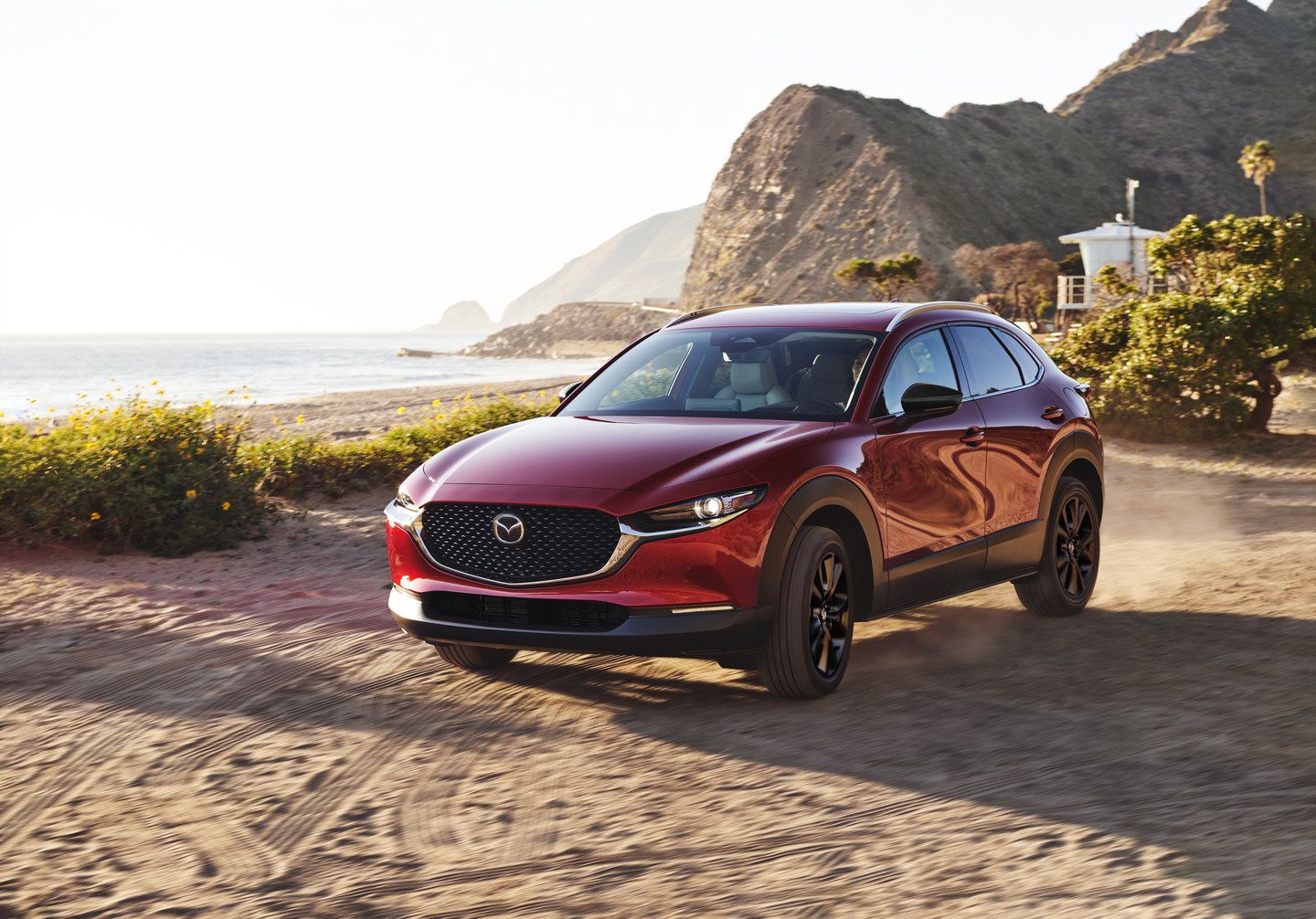
When the first snowfall hits Scarborough and side streets off Lawrence Avenue turn into unplowed obstacle courses, your vehicle's all-wheel-drive system either proves its worth or leaves you spinning your wheels. Mazda's i-ACTIV AWD technology takes a different approach than conventional AWD systems—one that anticipates slippery conditions before your tires lose grip, making it particularly effective for navigating Ontario's unpredictable urban winter streets.
Understanding how this system works, and how to use Mazda's drive modes strategically, can transform your confidence when turning onto that snow-covered residential street or climbing the icy hill near your neighbourhood. Let's examine what makes i-ACTIV AWD different and how it protects you in real-world Scarborough winter driving.
What Makes i-ACTIV AWD Different from Conventional Systems
Most all-wheel-drive systems react after wheelspin occurs—they detect slipping tires, then redistribute power. Mazda's i-ACTIV AWD operates on prediction rather than reaction. The system continuously monitors 27 different sensors at 200 times per second, analyzing factors like outside temperature, windshield wiper activity, steering angle, throttle position, and wheel speed.
Before you even encounter a slippery patch, i-ACTIV AWD has already calculated the likelihood of reduced traction and adjusted power distribution accordingly. When the system detects freezing temperatures and active wipers (indicating precipitation), it proactively sends more torque to the rear wheels—preparing for slippery conditions before your tires communicate the problem through loss of grip.
This predictive capability matters most on unplowed side streets where traction changes dramatically within a few metres. One moment you're on relatively clear pavement, the next you're crossing a section where packed snow has turned to ice. Conventional reactive systems experience a brief delay while detecting wheelspin; i-ACTIV AWD has already adjusted for the changing surface.
The system can vary torque distribution from 100% front-wheel drive (for optimal fuel efficiency on dry pavement) to 50/50 front-rear split when maximum traction is needed. This continuous adjustment happens seamlessly, without driver intervention, maintaining stability through corners, over slush-filled streetcar tracks, and during acceleration from stop signs on snow-covered intersections.
Understanding Mazda's Drive Selection Modes for Winter Streets
Mazda Intelligent Drive Select (Mi-Drive) gives drivers direct control over how i-ACTIV AWD responds to different conditions. Available across Mazda's SUV lineup—including the CX-30, CX-5, CX-70, and CX-90—these selectable modes optimize powertrain behaviour, throttle response, and transmission shift points for specific driving scenarios.
Normal Mode serves as the default setting for most winter driving in Scarborough. This mode balances fuel efficiency with responsive AWD engagement, making it suitable for plowed main roads like Lawrence Avenue, Highway 401 commutes, and typical city driving where conditions vary but aren't extreme. The system remains predictive, adjusting torque distribution based on sensor inputs while prioritizing smooth power delivery and reasonable fuel consumption.
Sport Mode sharpens throttle response and holds lower gears longer, keeping the engine in its power band. While this mode enhances driving engagement on clear roads, it also provides benefits in winter conditions where you need more immediate power delivery—such as merging onto the DVP from a snow-narrowed on-ramp or accelerating through a slushy intersection before the light changes. Sport Mode maintains more aggressive AWD engagement, keeping power ready at all four wheels.
Off-Road Mode proves most valuable for unplowed residential streets, snow-covered parking lots, and situations where you're driving through several centimetres of fresh snow. This mode modifies several vehicle systems simultaneously: it increases rear-wheel torque bias for better forward momentum through deep snow, adjusts traction control to allow more wheelspin before intervention (helping you power through rather than getting stuck), and optimizes brake force distribution for slippery surfaces.
Off-Road Mode also activates Off-Road Traction Assist on equipped models. This feature applies light braking force to a spinning wheel, transferring torque to the wheel with better grip—particularly useful when one side of your vehicle is on packed snow while the other side sits on ice, a common scenario on poorly plowed neighbourhood streets.
For drivers of Mazda's larger SUVs like the CX-70 and CX-90, Towing Mode adds another option. While primarily designed for trailer stability, Towing Mode's adjustments—including modified shift points, enhanced engine braking, and optimized AWD engagement—can benefit winter driving even without a trailer attached, particularly when descending snow-covered hills where controlled deceleration matters.
Real-World Application: Navigating Unplowed Scarborough Streets
Consider a typical scenario: you're driving home after a snowfall, turning off Lawrence Avenue onto a residential side street that hasn't seen a plow yet. Here's how to use i-ACTIV AWD and drive modes effectively:
Before turning: Switch from Normal to Off-Road Mode while still on the plowed main road. This prepares the AWD system for reduced traction and adjusts throttle mapping for better control in slippery conditions.
During the turn: i-ACTIV AWD monitors your steering angle and applies G-Vectoring Control Plus, which subtly adjusts engine torque during cornering. This shifts weight to the front wheels for better grip while turning, then smoothly transfers power back as you straighten out—reducing the likelihood of the rear end sliding out on packed snow.
Accelerating through snow: Maintain steady, moderate throttle pressure. Off-Road Mode allows slightly more wheelspin than Normal Mode, which helps you maintain momentum through deeper snow rather than bogging down. The system continuously redistributes torque between front and rear axles, finding traction wherever it's available.
Approaching a stop sign: Begin braking earlier than you would on dry pavement. While i-ACTIV AWD optimizes acceleration and cornering traction, it doesn't change your braking distance on ice. The system works with ABS and Electronic Brake Force Distribution to help maintain steering control during braking, but physics still requires extra stopping distance on slippery surfaces.
Climbing an icy hill: This is where i-ACTIV AWD's predictive capability shines. As you approach the incline, the system has already detected the grade through accelerometer sensors and increased rear torque bias. Maintain steady throttle—avoid sudden acceleration that could break traction. If you feel the vehicle struggling, resist the urge to floor the accelerator; instead, maintain consistent pressure and let the AWD system work through its torque distribution algorithms.
Common Winter Driving Mistakes That Defeat AWD Systems
Even the most advanced all-wheel-drive system can't overcome driver errors. Several common mistakes reduce i-ACTIV AWD's effectiveness:
Over-reliance on AWD for braking: All-wheel drive helps you accelerate and corner on slippery surfaces—it does not help you stop. Your vehicle has four-wheel brakes regardless of drivetrain configuration. Drivers who assume AWD provides shorter stopping distances often follow too closely in winter conditions, increasing collision risk.
Ignoring tire condition: i-ACTIV AWD distributes power to the wheels with the best traction, but it can't create grip where none exists. Worn all-season tires with insufficient tread depth will limit the system's effectiveness. Winter tires provide substantially better traction in temperatures below 7°C, and their softer rubber compound remains flexible in cold weather—giving i-ACTIV AWD better grip to work with.
Sudden steering or throttle inputs: Smooth, gradual inputs allow i-ACTIV AWD time to adjust torque distribution and maintain stability. Jerking the steering wheel or stabbing the throttle can overwhelm even predictive traction systems, causing slides that require driver correction.
Leaving the system in Sport Mode on ice: While Sport Mode has winter applications, it's not ideal for sustained driving on very slippery surfaces. The more aggressive throttle mapping can make it easier to break traction unintentionally. Reserve Sport Mode for situations requiring quick power delivery, then return to Normal or Off-Road Mode for general winter driving.
How i-ACTIV AWD Integrates with Mazda's Safety Systems

Mazda's i-Activsense safety suite works in concert with i-ACTIV AWD to provide multiple layers of winter driving protection. These systems don't replace attentive driving, but they add valuable assistance when conditions deteriorate:
Mazda Radar Cruise Control with Stop & Go maintains set following distances from the vehicle ahead, automatically adjusting speed as traffic slows or accelerates. In winter conditions where following distances should increase, this system helps prevent the gradual creep-forward that occurs in heavy traffic, reducing rear-end collision risk on icy roads.
Smart Brake Support monitors the road ahead and can apply emergency braking if it detects an imminent collision that the driver hasn't reacted to. On slippery streets where stopping distances extend significantly, this extra fraction of a second can make the difference between a close call and an impact.
Lane-Keep Assist and Lane Departure Warning help counter the reduced lane visibility that occurs during snowstorms or when snow banks narrow the effective road width. These systems provide gentle steering corrections or warnings if the vehicle drifts toward the lane edge—useful when blowing snow obscures lane markings.
Blind Spot Monitoring and Rear Cross Traffic Alert become even more valuable in winter when snow-covered side windows and mirrors reduce visibility. These systems alert you to vehicles in adjacent lanes or approaching from the sides when backing out of snow-narrowed parking spaces.
The integration point: i-ACTIV AWD provides the traction foundation that allows these safety systems to function effectively. Electronic stability control can't prevent a slide if the tires have no grip to work with; predictive AWD ensures power goes where traction exists, giving safety systems the physical connection to the road they need to keep you stable.
Maintaining i-ACTIV AWD Performance Through Winter
While i-ACTIV AWD operates automatically without required maintenance beyond regular service intervals, several practices help maintain optimal winter performance:
Tire pressure monitoring: Cold temperatures reduce tire pressure—approximately 0.7 kPa per 5°C temperature drop. Underinflated tires reduce the contact patch and grip available to i-ACTIV AWD. Check tire pressure monthly during winter, adjusting to the manufacturer's recommended cold-weather specification found on the driver's door jamb placard.
Regular underbody washing: Road salt and de-icing chemicals accumulate on AWD components, potentially causing corrosion over time. Periodic underbody washing during winter—particularly after exposure to heavily salted roads—helps protect drivetrain components and extends system longevity.
Allowing the system to warm up: Like all mechanical systems, i-ACTIV AWD operates most efficiently at normal operating temperature. While modern vehicles don't require extended idling warm-ups, driving gently for the first few minutes after a cold start allows fluids to circulate and reach optimal viscosity—improving system responsiveness.
Addressing dashboard warnings immediately: If the AWD warning light illuminates, have the system inspected promptly. Continuing to drive with a malfunctioning AWD system not only reduces winter traction but may cause additional component damage. Mazda's diagnostic systems can identify specific faults, allowing targeted repairs rather than expensive exploratory work.
Comparing i-ACTIV AWD Across Mazda's Lineup
i-ACTIV AWD is available across most of Mazda's current Canadian lineup, with slight variations in implementation:
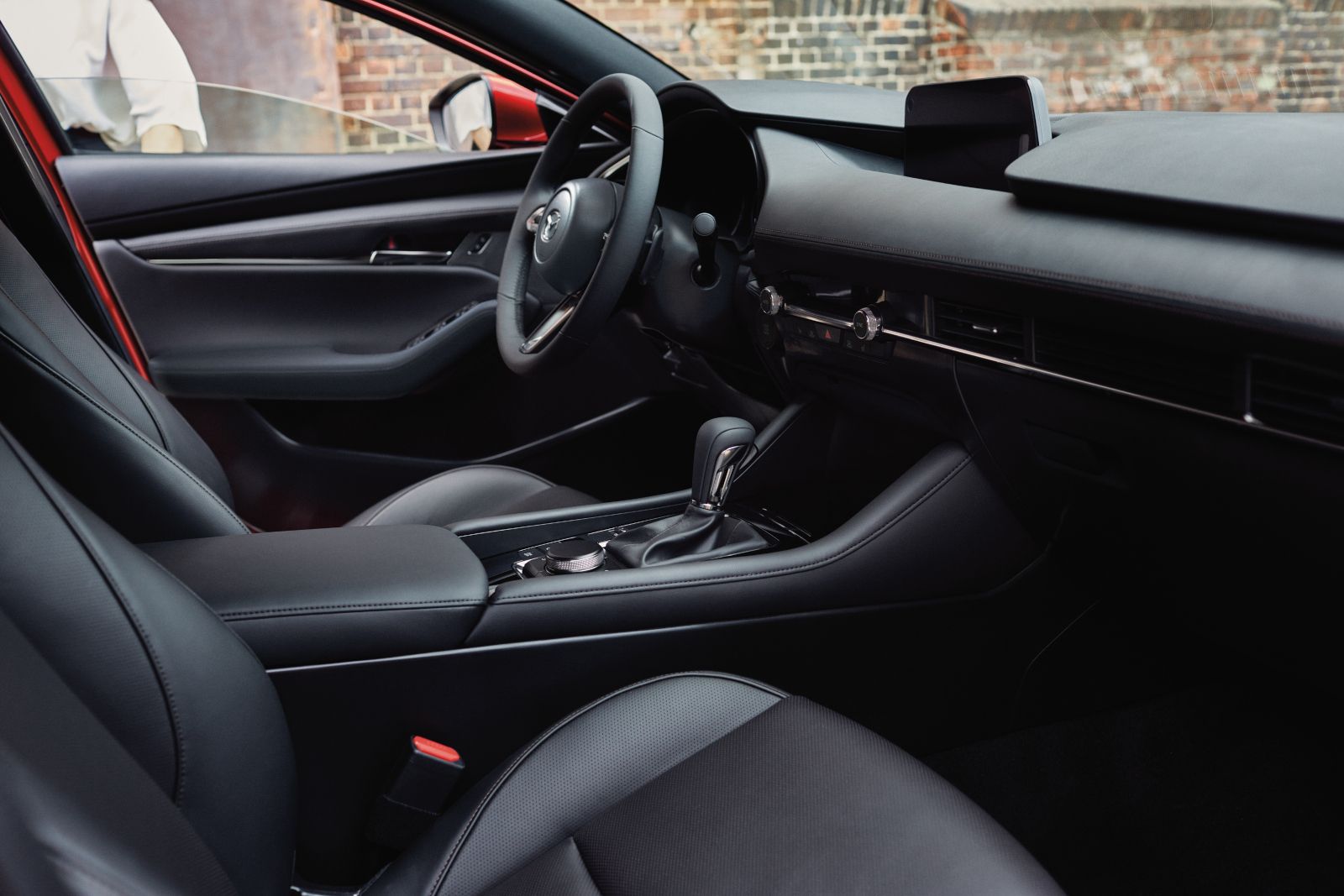
Mazda3 and Mazda3 Sport: Available with the GS Luxury Package, i-ACTIV AWD transforms these compact models into capable winter vehicles. The system adds approximately 59 kg to curb weight but provides substantially improved traction on slippery roads. The Mazda3's lower ride height compared to SUVs means less ground clearance in deep snow, but i-ACTIV AWD still delivers confident handling on plowed streets and moderate snow accumulation.
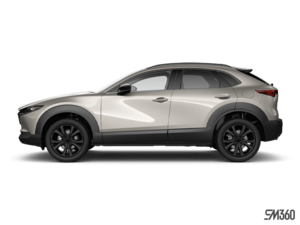
CX-30: Standard i-ACTIV AWD on all trims makes this subcompact crossover a strong winter choice for urban drivers. Higher ground clearance than the Mazda3 improves deep-snow capability, while the compact dimensions maintain manoeuvrability on narrow residential streets. The CX-30 also includes Off-Road Traction Assist as standard equipment.
CX-5: Mazda's best-selling model pairs i-ACTIV AWD with multiple powertrain options, including the available Skyactiv-G 2.5 Turbo engine producing 227 horsepower and 310 lb-ft of torque. This power advantage helps when pulling away from stops on icy hills or merging into highway traffic during snowstorms. The CX-5's larger size and weight provide additional stability in crosswinds and when navigating slushy highway lanes.
CX-70 and CX-90: These larger SUVs feature i-ACTIV AWD as standard across all models, including plug-in hybrid variants. The PHEV powertrain's instant electric torque delivery complements i-ACTIV AWD's predictive capability—electric motors provide immediate response without the slight lag inherent in combustion engines, improving traction control precision. The CX-70 and CX-90 also include Kinematic Posture Control, which uses subtle brake applications during cornering to reduce body roll and maintain stability on slippery curves.
When AWD Isn't Enough: Understanding System Limits
i-ACTIV AWD significantly improves winter traction, but it has limits that Ontario drivers should understand:
Deep snow beyond ground clearance: If snow depth exceeds your vehicle's ground clearance, AWD can't prevent high-centring (where the vehicle's undercarriage rests on snow, lifting wheels off the ground). The CX-30 offers 178 mm of ground clearance, the CX-5 provides 203 mm, while the CX-70 and CX-90 deliver 220 mm. If unplowed snow approaches these depths, even i-ACTIV AWD can't maintain forward progress.
Glare ice with minimal friction: When temperatures hover near freezing and create perfectly smooth ice, even the most advanced AWD system has limited grip to work with. In these conditions, winter tires become critical—their softer compound and specialized tread patterns provide the mechanical grip that AWD needs to function effectively.
Extreme grades in icy conditions: Very steep hills covered in ice may exceed i-ACTIV AWD's capability to maintain traction. If you encounter a hill where the vehicle can't maintain forward momentum despite steady throttle and proper drive mode selection, don't force it. Back down carefully (if safe) and find an alternate route.
Stuck in deep snow or ruts: If you become stuck, i-ACTIV AWD's predictive algorithms can actually work against you—the system may reduce power to spinning wheels before you've built enough momentum to escape. In stuck situations, some drivers find success by briefly switching to Sport Mode (which allows more wheelspin) and using gentle rocking motions (alternating between drive and reverse) to build momentum. However, excessive wheelspin damages drivetrain components; if you can't free the vehicle within a few attempts, call for assistance rather than risk mechanical damage.
Experience i-ACTIV AWD at Scarboro Mazda
Understanding how i-ACTIV AWD works in theory is valuable, but experiencing its predictive traction management on Scarborough's winter streets provides the real confidence. Scarboro Mazda invites you to test drive any AWD-equipped Mazda model and feel the difference that predictive all-wheel drive makes when navigating Ontario's challenging winter conditions.
Our team can demonstrate drive mode selection, explain how i-ACTIV AWD integrates with your driving style, and help you choose the Mazda model that best fits your winter driving needs—whether that's the compact efficiency of a Mazda3 with AWD, the versatile capability of a CX-5, or the family-focused space of a CX-70 or CX-90.
Visit Scarboro Mazda in Scarborough to schedule your winter test drive and discover why Mazda's i-ACTIV AWD has earned recognition for its intelligent approach to all-weather traction.