How Mazda Radar Cruise Control Handles Stop-and-Go Traffic on the DVP
December 23 2025,
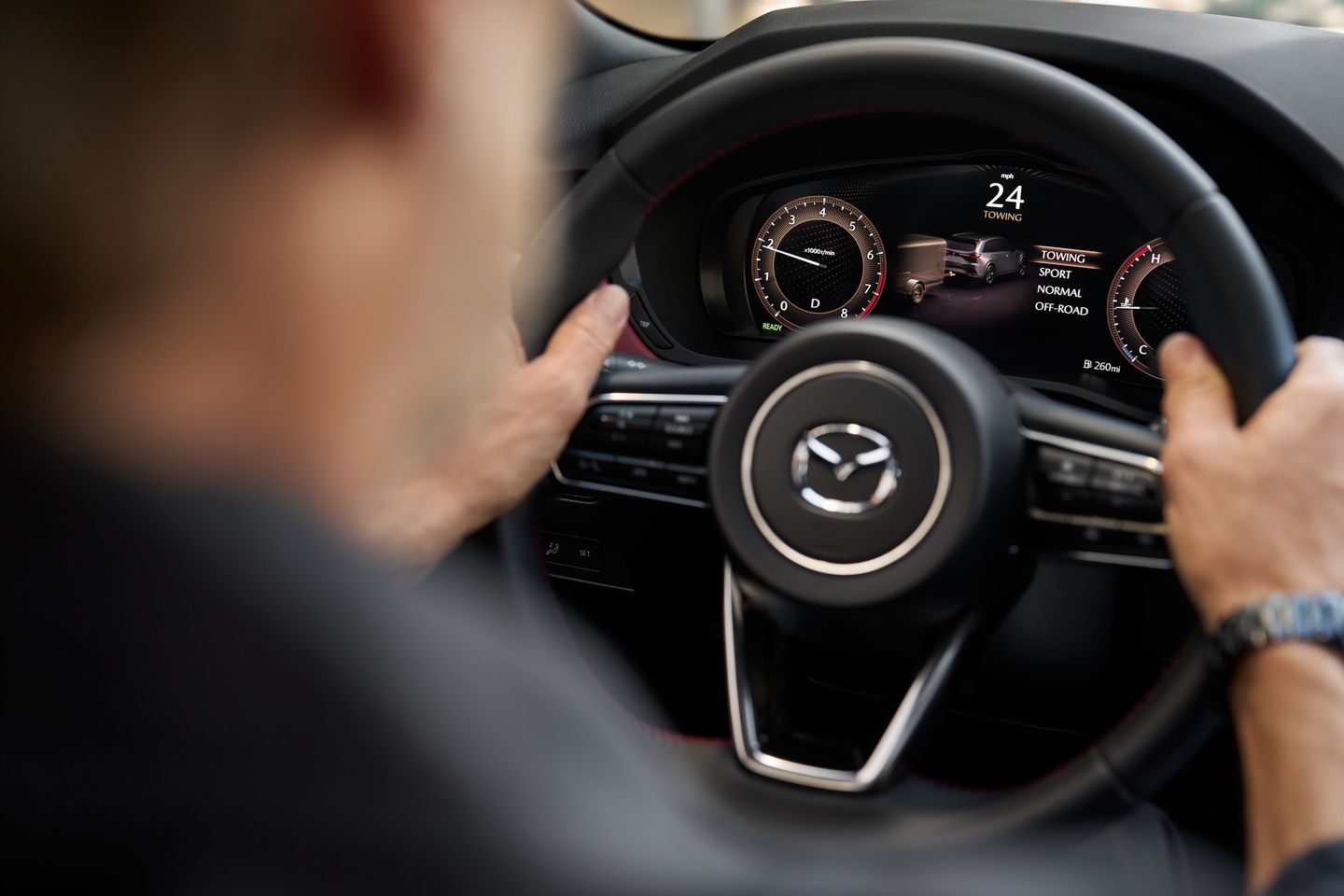
Anyone driving the Don Valley Parkway during rush hour knows the drill: brake, crawl, brake, crawl, repeat. The stop-and-go rhythm of Toronto traffic turns a simple commute into an exhausting test of patience and focus. Mazda Radar Cruise Control with Stop & Go function takes the strain out of heavy traffic while keeping you safe and in control.
Available across Mazda's current lineup, including the CX-30, CX-70, and CX-90, this system uses radar sensors to monitor the vehicle ahead and automatically adjusts your speed to maintain a safe following distance. In congested conditions, it brings your vehicle to a complete stop and resumes movement when traffic flows again—all without constant foot shuffling between pedals.
What is Mazda Radar Cruise Control with Stop & Go?
Mazda Radar Cruise Control (MRCC) monitors the speed of the vehicle ahead and automatically adjusts cruise control settings to maintain a safe headway distance. The Stop & Go function extends this capability into low-speed traffic, allowing the system to operate even when speeds drop below typical highway cruising.
The system works through a forward-facing radar sensor that detects vehicles up to 200 metres ahead. Once activated, MRCC maintains your set speed on open roads and adjusts when slower traffic appears. In stop-and-go conditions, the system brings your Mazda to a complete stop and automatically resumes when the vehicle ahead moves forward.
How It Works in Real-World Scarborough Traffic
For drivers navigating the DVP, Highway 401, or Kingston Road during peak hours, MRCC with Stop & Go delivers practical benefits:
- Reduced Pedal Work: The system handles acceleration and braking in traffic, reducing driver fatigue during long commutes
- Consistent Following Distance: Radar monitoring maintains safe spacing automatically, adapting to changing traffic speeds
- Smooth Transitions: Unlike abrupt manual braking, MRCC applies gradual deceleration for more comfortable stops
The system offers adjustable following distance settings via steering wheel controls, allowing you to select gap spacing that matches traffic density and your personal preference.
Integration with Mazda's i-Activsense Safety Suite
MRCC with Stop & Go is part of Mazda's broader i-Activsense safety technology suite, which includes:
- Smart Brake Support (SBS): Detects vehicles and obstacles ahead and can apply automatic emergency braking if collision risk is detected
- Forward Obstruction Warning (FOW): Provides early alerts to approaching collision risks
- Lane Departure Warning System (LDWS): Monitors lane markings and alerts you to unintended drift
- Lane-Keep Assist System (LAS): Provides gentle steering corrections to help maintain lane position
These systems work together to create a layered safety net, with MRCC handling speed management while other features monitor lateral positioning and potential hazards.
Key Differences: MRCC vs. Full Traffic Jam Assist

|
Feature |
Mazda MRCC with Stop & Go |
Competitor Traffic Jam Assist |
|
Speed Range |
Full-speed operation including stop-and-go |
Typically limited to 40 km/h or less |
|
Steering Assistance |
Driver maintains steering control (CTS-equipped models offer lane centring) |
May provide limited steering support |
|
Auto-Resume Time |
Automatic resume after brief stops |
Up to 3 minutes (varies by system) |
|
Primary Function |
Speed and distance management |
Speed, distance, and limited lane centring |
Mazda's approach prioritizes driver engagement. The system manages acceleration and braking but requires you to maintain steering control at all times (unless equipped with optional Cruising & Traffic Support). This design philosophy keeps drivers actively involved rather than encouraging passive reliance on automation.
Practical Tips for Using MRCC in Ontario Conditions
Winter Driving: Keep the front radar sensor clear of snow, ice, and road spray. The sensor is located in the lower grille and can be blocked by winter buildup, which will temporarily disable the system until cleaned.
Highway Transitions: MRCC works best on controlled-access highways with clear lane markings. The system may not be suitable for winding roads, intersections, or areas without visible lane separation.
Gap Settings: In dense traffic, use the closer gap setting to prevent other vehicles from cutting in repeatedly. On open highways, a larger gap provides more reaction time.
Driver Responsibility: MRCC is a driver assistance feature, not an autonomous driving system. Always remain alert, keep hands on the wheel, and be ready to take control.
Which Mazda Models Offer MRCC with Stop & Go?
Mazda Radar Cruise Control with Stop & Go function is standard equipment on:
- 2026 Mazda CX-30: All trims include MRCC as part of the standard i-Activsense suite
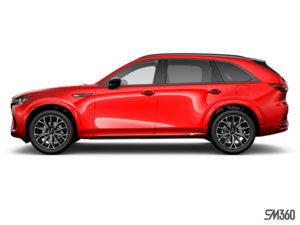
- 2026 Mazda CX-70: Both MHEV and PHEV variants come equipped with MRCC with Stop & Go function (Cruising & Traffic Support available on select trims)
- 2026 Mazda CX-90: Standard across the lineup, including base GS trim
The system is also available on other current Mazda models. Check with your dealer for specific trim availability.
Experience Mazda's Driver-Focused Technology at Scarboro Mazda
Mazda Radar Cruise Control with Stop & Go function reduces the physical and mental fatigue of stop-and-go traffic. It maintains safe following distances, handles speed adjustments automatically, and keeps you engaged with the driving experience—exactly what Scarborough drivers need for the DVP grind.
Visit our team at Scarboro Mazda in Scarborough to experience MRCC with Stop & Go. Book a test drive and see how this technology adapts to real Ontario traffic conditions.